

Most sourcing failures do not begin with a bad factory. They begin with a competent factory that was never asked the right questions. A supplier can machine accurate steel, quote a fair number and still deliver a project that misses its launch date — because the gap between what you assumed and what they assumed was never closed. This is the checklist worth running before a purchase order leaves your desk, wherever the supplier is.
Three Ways Supplier Selection Goes Wrong
Buyers rarely pick an obviously bad supplier. They pick one that looks reasonable and then discover a mismatch. Three patterns account for most of it.
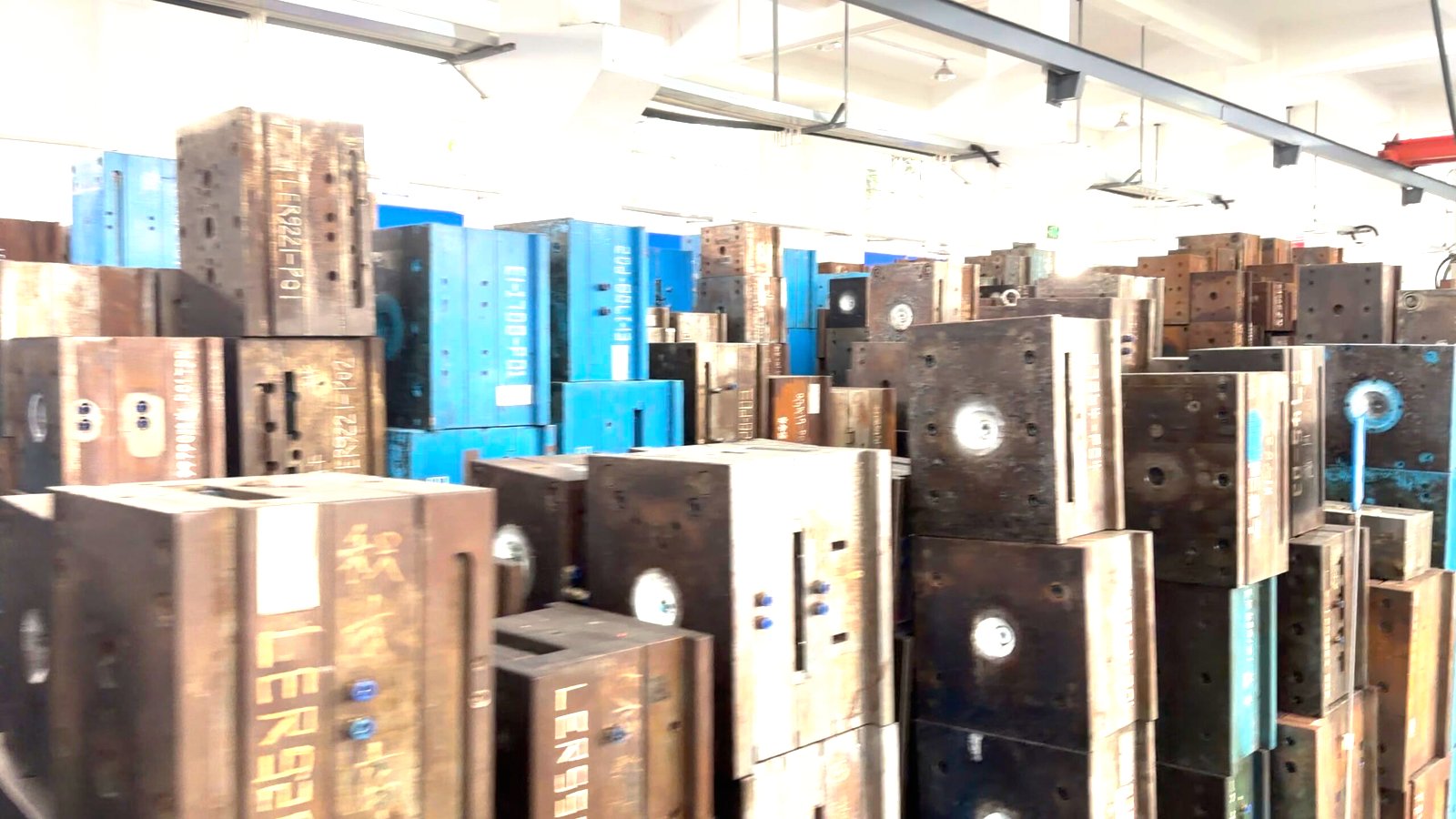
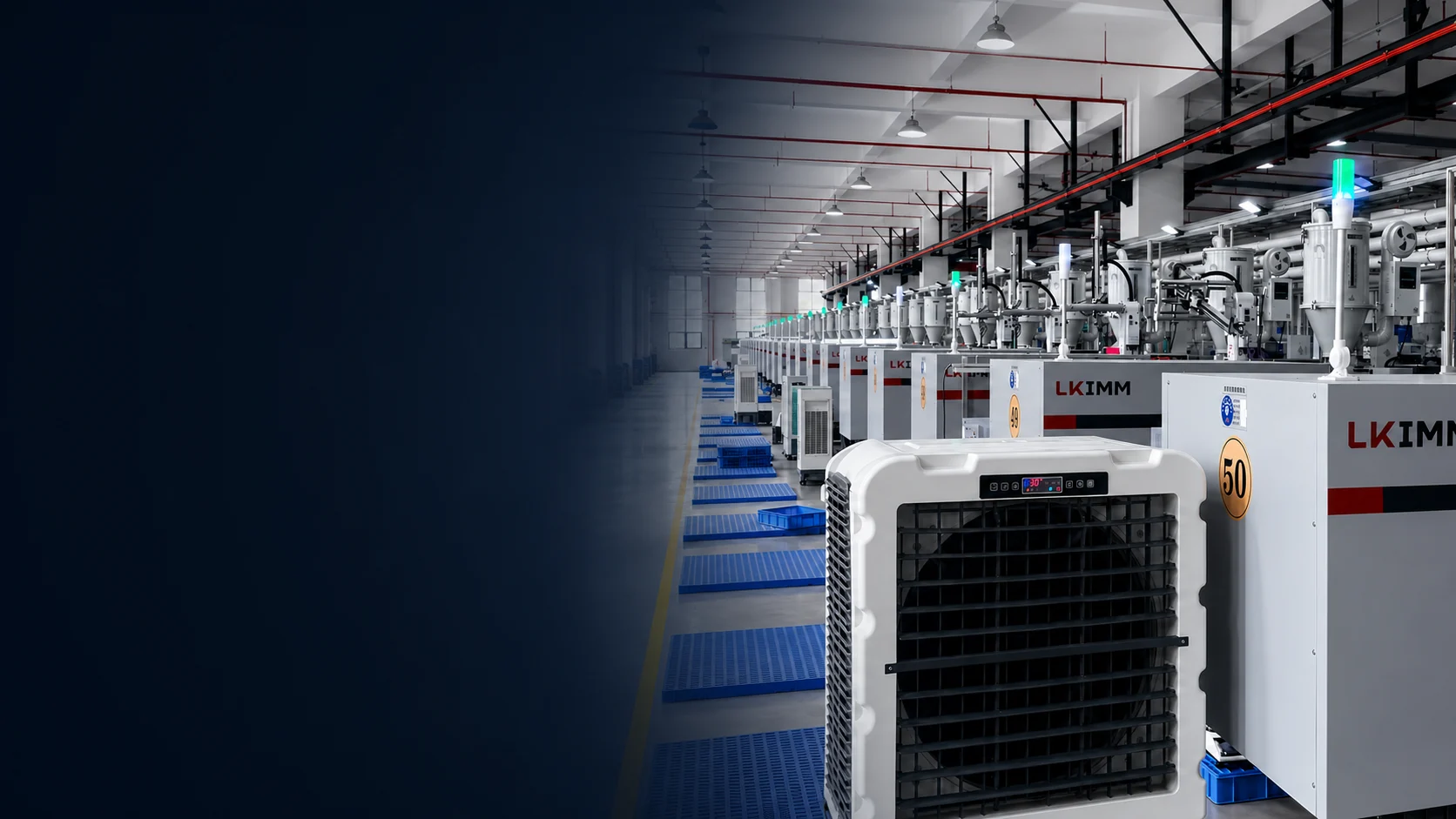
- Capability read from a website. A catalog shows large machines, a clean floor and a wall of certificates. None of it tells you whether this supplier has ever built a mold like yours, or whether the press you need is booked for the next two months. Capability is specific: a factory that is excellent at large housing molds may be mediocre at a sixteen-cavity precision part.
- Comparing the wrong number. Two quotations differ by 30% on tooling and 4% on piece price. The buyer negotiates the tool, wins, and then pays the difference back over the first year of production — through a slower cycle, a higher scrap rate, or a mold that needs rework at month four. The tool is a one-time cost. The part is forever.
- No exit ramp. Nothing was written down about who owns the mold, what documentation comes with it, or what happens if the relationship ends. Two years later the buyer wants to dual-source and discovers the mold is described as belonging to the supplier, the drawings were never handed over, and the process was never documented.
There is a fourth, quieter one: timing. Tooling lead time is often quoted as the time to cut steel, while the buyer hears the time to have parts in hand. The gap between the two — trial shots, corrections, texture, validation, and the pilot run — is routinely several weeks and occasionally several months.
What You Are Actually Buying
A tooling project delivers three separate things, and they are priced separately:
- An asset — the mold itself, which has a resale value and a service life measured in shots.
- A part — a unit price that depends on cycle time, cavity count, material and scrap.
- A process — the validated settings, the inspection plan and the documentation that lets the part be made again next year, by the same supplier or a different one.
Only the first one appears in a tooling quotation. The second appears in a separate price list and is where the real money is. The third is usually not priced at all, and is exactly what goes missing when a program is transferred. If a supplier cannot describe all three of those as distinct deliverables, the quotation is incomplete — not cheap.
A useful test: ask for the piece price at three volumes — say 5,000, 20,000 and 100,000 parts a year. A supplier who understands their own process will show the price falling for a real reason: a higher cavity count, a faster cycle, or a cheaper regrind blend. A supplier who simply scales the same number is quoting from a template.
The Eight-Point Checklist
These are the checks that actually correlate with a project landing on time. Each one is answerable in a single message, and each one is hard to fake convincingly.
1. Can they show the mold in their own building?
Ask for a photo or a short video of a comparable mold, taken in their shop, with something in frame that identifies the date or the job. This single request filters out a surprising number of intermediaries. A factory walks twenty meters and takes the picture. A reseller has to ask someone else, and the delay is usually visible.
2. Do they own presses in your tonnage band, and is one free?
Mold making and molding are different businesses, and many capable mold shops outsource trial shots. That is not disqualifying — but you need to know, because it changes who is responsible when a sample is late. Ask for the tonnage of the press that will run your mold, and ask when it is available. A supplier who is vague about the second question is telling you something.
3. Who actually cuts the steel?
Design, CNC, EDM, wire cutting, fitting and polishing are six different skills. The best factories do all of them under one roof. Others subcontract EDM or texture work, which is normal — but the answer should be specific and the partner should be nameable. "We handle everything" is not an answer; it is a refusal to answer.
4. Is the steel grade written down, separately for cavity and core?
This is the most commonly skipped specification in the entire quotation, and the one with the largest effect on mold life. A pre-hardened P20-class steel, a modified 718, a hardened stainless and an H13 are not interchangeable, and the difference in cost between them is modest compared with the difference in how many shots the tool survives. See material selection and engineering support for how the choice is normally argued. Ask for the grade in writing, and ask which parts of the mold get which grade — cavity, core, and any inserts or slides.
5. Who runs the trial, and who signs the sample?
First trial — usually called T1 — produces a working sample, not a finished part. The correct expectation is that dimensions will be off somewhere and steel will need correcting. What matters is the protocol: is there a dimensional report against your drawing, who signs it, and how many correction rounds are included before additional rounds become chargeable. Suppliers who promise a perfect first sample are usually planning to argue later about whether the part is acceptable.
6. What inspection do they own, and what do they run on every lot?
"100% quality control" means nothing. Ask for the instrument, the sampling plan and the report format. A shop with a coordinate measuring machine, a profile projector and a torque or pull tester can produce evidence. A shop with calipers and a good attitude can produce parts, but not evidence. The relevant page on their own site is usually assembly, packaging and quality control — and it is worth reading to see whether they describe a process or just a promise.
7. What is the maintenance and spare-parts plan?
A mold is a machine. It needs its ejector pins, springs, water fittings, nozzle tips and slides serviced on a schedule, and the wear parts should be identified at handover. Ask what the recommended service interval is, in shots rather than in months, and ask for a spare set of the two or three components most likely to fail. This costs very little at the time of building and is difficult to source in a hurry at the time of a breakdown.
8. What happens to the mold at the end?
Ownership, handover and documentation. The mold should be described as your property in the tooling order, marked with your name and a serial number, and delivered at the end of the program along with 2D part drawings, mold assembly drawings, water line and hot runner layouts, the steel certificates, and the process sheet from the validated run. None of this is expensive to prepare at the time. All of it is expensive to reconstruct.
Factory or Trading Company
A trading company is not automatically a bad choice. Good ones add real value: they consolidate several processes, handle documentation and shipping, and absorb communication risk. The problem is only when a trading company is mistaken for a factory, because you then assume a level of process control and accountability that does not exist.
| Signal | Points to a factory | Points to a reseller |
|---|---|---|
| Machines | Names the tonnage band and the make — and can tell you which presses are free next month | Talks about "capacity" without numbers, or promises any tonnage you ask for |
| Steel purchasing | Buys mold base and cavity steel directly; can send a steel mill certificate with a heat number | Cannot produce steel documents, or sends a generic certificate with no matching number |
| Where work happens | CNC, EDM, wire cut and fitting under one roof, or a named long-term partner they can show | Vague about which operations are theirs; every answer is "we handle it" |
| Trial shots | Runs the mold on their own press and sends photos of the mold in the machine | Sends sample parts with no context, or a video that could belong to anyone |
| Design changes | Can quote the cost of a change in a day, because they know what the steel work involves | Goes quiet for a week, then comes back with a number that seems invented |
| Price | Defends a specific number with a breakdown | Beats every competitor by 20% and explains it as "our own factory" |
| Problems | Describes a failure they had and how it was fixed | Has never had a problem with any project |
| Communication | Answers technical questions with drawings, measurements and photos | Answers with reassurance, emojis and "no problem, we are professional" |
The fastest way to tell them apart is not a question but a request: ask for a live video call, walking from the machines to the mold you discussed. Factories agree and improvise. Intermediaries postpone.
Questions That Expose a Reseller
Technical questions are hard to fake, because the answers have to be consistent with each other and with your drawing. These eight are a good opening round.
| Ask this | A weak answer sounds like | A strong answer sounds like |
|---|---|---|
| What tonnage press will this mold run in, and how many shots per hour do you expect? | "We have all sizes of machine" | "A 250-ton; about 38 shots an hour at a 14-second cycle, if the wall stays at 2 mm" |
| Which steel for the cavity, which for the core, and why? | "Standard steel, good quality" | "718H in the cavity for polishability, S136 in the core because you want the textured face to release" |
| What is the wall thickness on the thickest section of my part, and where is the sink risk? | "The design is fine, we can mold it" | Points to the exact boss, suggests a core-out or a thickness change, gives a number |
| How many cavities would you recommend, and what does each step cost me? | "As many as you want" | "Four cavities. Two would halve the tool but double your piece price at your volume" |
| Who signs off the first sample, and against what drawing? | "We will send photos" | "We send a dimensional report against your 2D drawing; you sign T1 before we cut any steel for changes" |
| What inspection do you run on every production lot? | "We check 100% quality" | Names the instrument, the sampling plan and the report format, and says who signs it |
| What happens if the tool does not make a good part on the first try? | "It will work, don’t worry" | "T1 is a working sample, not a finished one. We plan two rounds of steel correction before we call it done" |
| If I move production elsewhere in two years, what do I receive? | "Why would you move?" | "The mold, the 2D drawings, the water and hot runner layouts, and the process sheet" |
You are not looking for the most impressive answer. You are looking for an answer that contains a number, a trade-off, or an admission. Suppliers who are actually building the tool will volunteer the difficulty, because they will have to solve it. Suppliers who are only reselling will describe everything as easy.
Want your drawing reviewed before you shortlist anyone?
Send us the 3D model and the resin. You will get a DFM report that names the wall thickness problems, the likely gate position and the changes we would make — plus a quotation with the steel grades written out, so you have a real baseline to compare other offers against.
Red Flags
None of these is fatal on its own. Three of them together usually is.
- A price that beats everyone by a wide margin with no explanation, and a reluctance to break it down.
- Guaranteed lead times with no mention of trial shots, corrections or validation — a promise that ignores the part of the schedule where delays actually happen.
- No questions about your part. A supplier who quotes without asking about wall thickness, resin, tolerances, appearance requirements or annual volume is quoting something they have not understood.
- Resistance to a DFM report. Either they do not do one, or they charge for it separately as an afterthought. Either way, the design review is where most defects should be caught.
- Unwillingness to name steel grades or component brands, especially for a hot runner. If the manifold brand is a secret, it is usually a cheap one.
- A certificate with no scope. A quality certificate that does not say which processes and which site it covers tells you almost nothing about the mold you are buying.
- Payment terms that require most of the money before the sample. Staged payment tied to T1 and validation is standard practice, not a lack of trust.
- Vagueness about what happens after the tool is finished. No maintenance offer, no spare parts, no documentation list.
Verifying Without Flying There
A factory visit is the best evidence and is often not practical. These three substitutes get most of the value.
The video audit
Do not ask for a promotional video. Give the supplier a script and ask for a single unedited walk-through on a live call or a phone video:
- Start at the machine you will run on, and read the model plate.
- Show the mold you discussed, with your project number or a note visible.
- Pan across the machining area — CNC, EDM, wire cut — and stop at any mold currently in progress.
- Show the inspection bench, and ask the inspector to run one measurement on camera.
- Finish at the packing area, and show one carton label for an outgoing order.
Five minutes of this is worth more than an hour of meeting. It is also hard to stage convincingly, because a real shop is full of specific things — fixtures, half-finished work, someone’s tools on a bench — that do not appear in borrowed footage.
Sample part forensics
If the supplier has made something similar, ask for sample parts rather than photographs. In your hands, a part tells you a lot:
- Gate remnant — a clean, consistent mark suggests a maintained tool and a settled process; torn or stringy remnants suggest a worn gate or an unstable melt.
- Ejector marks — faint and even is normal; if they are proud, polished flat, or inconsistent between parts, the ejection is being forced.
- Weight consistency — weigh ten parts. Spread of more than a fraction of a percent on a stable part points to an unbalanced runner or a drifting process.
- Flash and short shots — none on a mature tool. Their presence on a part presented as a reference is a statement about the process window.
- Warp — put the part on a surface plate, or on a flat table with a straight edge. A part that rocks had a cooling problem that nobody fixed.
References and third-party inspection
Ask for two customers in a comparable industry, and actually contact them — one question is enough: what went wrong, and how did the supplier handle it. Separately, for the first production shipment, a third-party pre-shipment inspection costs a small fraction of the order value and converts a promise into a document with photographs and measured samples.
Structuring the First Order
The goal of a first order is not to get the best price. It is to buy information cheaply and keep the option to stop.
| Stage | What you commit | What you can still walk away from |
|---|---|---|
| 1. DFM review | Nothing, or a small engineering fee | Everything. This is where you learn how they think. A DFM report that only lists moldability problems is worth less than one that proposes a fix and prices it |
| 2. Tooling order | Typically 30–50% of the tool price | Very little — this is the point of no return. Do not pay it before the drawings are signed |
| 3. T1 sample | Nothing further | The part, not the mold. Expect to ask for steel changes; a first sample that needs none usually means nobody looked closely |
| 4. Tool validation | Usually nothing, or trial material | Still the mold. This is where dimensions, texture and cycle time are proven over a longer run |
| 5. Pilot order | One production batch | The volume relationship, if the pilot reveals process instability |
| 6. Balance and release | The balance of the tool price | Nothing. Pay it against a signed sample and the handover documents, not against a shipping date |
Two details are worth being explicit about. First, T1 is not acceptance — it is the start of a conversation about steel. Second, the balance payment should be tied to the handover package, not to the shipping date; otherwise the documents are the last thing to arrive and the first thing to be forgotten.
What Goes in the Tooling Agreement
Keep it to a page. These are the clauses that prevent the disagreements which actually occur:
- Ownership. The mold, and any spare inserts, are your property, paid for in full at the final milestone, and returnable on request.
- Marking. Your company name and a mold serial number on the mold base, so it can be identified in any photograph or audit.
- Cavity count and steel grades, written per component: cavity, core, inserts, slides.
- Correction rounds. How many rounds of steel change are included after T1, and the rate for further rounds.
- Cycle time guarantee, expressed as a maximum at a stated wall thickness and resin — not as an aspiration.
- Warranty basis. In shots or in years, whichever is clearer, with the maintenance that voids it stated plainly.
- Handover package. The document list from the checklist above, itemised, with the final payment tied to it.
- Data rights. The 3D and 2D files remain yours, and the supplier will not reuse the tool or the design for anyone else.
- Engineering change pricing. An agreed rate for design changes, so the second project does not start from zero.
Costs That Appear After the Quotation
Tool price and unit price are the two numbers everyone compares, and they are not the total. These are the lines that arrive later:
- Freight and duty — on the tool as well as on the parts, and both can be significant on a heavy mold base.
- Trial material — the resin consumed in trial shots and purging is usually billed, and is rarely in the quotation.
- Engineering changes — the changes the DFM review should have caught. A good DFM review is cheap insurance against a bad one.
- Secondary operations — degating, assembly, printing, ultrasonic welding, and the inspection that goes with them.
- Packaging — export cartons, dividers and pallets are a real per-unit cost at volume, and a surprisingly common omission.
- Payment and currency costs — transfer fees, exchange spread and the working capital tied up in a deposit.
- Maintenance and spares — the tool will need servicing, and the first set of wear parts should be budgeted from day one.
- Quality escapes — the most expensive line of all, and the one that a documented sampling plan exists to prevent.
The relationship between tool cost and part cost is not linear, and it is worth understanding before negotiating. A more expensive tool with more cavities, better cooling and a properly balanced runner can produce a cheaper part for years. Our breakdown of what drives injection mold cost covers the trade-offs in detail, and hot runner versus cold runner covers the single largest optional item in most quotations.
A One-Page Scorecard
Score each shortlisted supplier out of the weights below. The point is not the total — it is that two suppliers who looked identical in an email thread rarely score the same once the questions are structured.
| Criterion | Weight | What a full score looks like |
|---|---|---|
| Tool design capability | 20 | Sends a DFM report with a proposed gate location, cooling layout and a list of changes with costs |
| Steel and components | 15 | Named grades for cavity and core, named hot runner brand if used, certificates available |
| Machining in-house | 15 | CNC, EDM and fitting on site, with a tour or dated photos of the specific mold in progress |
| Press fit | 10 | A press in the right tonnage band with a free slot in your launch window |
| Quality system | 15 | Own measuring equipment, a sampling plan, a dimensional report format you have seen |
| Communication | 10 | Technical replies within a working day, with drawings rather than adjectives |
| References | 5 | Two customers you can contact, in a similar industry |
| Commercial terms | 5 | Mold ownership written down, staged payments tied to milestones, handover documents listed |
| Spare parts and service | 5 | A spare insert or ejector set quoted upfront, and a stated response time for breakdowns |
A supplier scoring under about 60 is a project risk regardless of price. Between 60 and 80, you are buying a workable tool with some supervision required. Above 80, the remaining differences are commercial rather than technical, and price becomes a reasonable tie-breaker.
One last point that is easy to overlook: the underlying physics of the process does not change with the supplier. Wall thickness, draft, cooling and gate position decide whether a mold runs well, and no amount of supplier diligence compensates for a part design that ignores them. If the design is still open, how plastic injection molding works covers the constraints, product design, reverse engineering and DFM covers the review process, and for the tooling side, injection mold design and mold building explains how the structure is chosen — including the classifications of injection molds that determine what a given tool can and cannot do.
Frequently Asked Questions
How do I verify a supplier I found on a marketplace listing?
Assume it is an intermediary until proven otherwise, and verify three things independently. First, ask for a live video walk-through that ends at the specific mold in progress, not a promotional clip. Second, ask for the steel grade and the press tonnage in writing, and check that the two answers are consistent with the size of the tool. Third, ask for two customer references in your industry and contact them. A party that cannot do all three is a broker, which may still be usable — but you should price and manage the relationship accordingly.
Should I pay for the mold in full upfront?
No. The usual structure is a deposit of roughly 30–50% to release steel, the remainder against a signed first sample and the handover documents. A supplier who needs the full amount before cutting steel is either undercapitalized or planning to prioritize other work. If a supplier genuinely needs more cash flow, a better answer is a shorter milestone schedule — for example deposit, then a payment at mold base completion, then sample, then balance — rather than a single upfront payment.
Who owns the mold — me or the supplier?
It should be you, and it should say so in the tooling order. In practice, ownership defaults to whoever paid for it, but the mold is only useful to you if you also hold the documentation and the physical tool can be moved. Two protections are worth adding: your name and a serial number marked on the mold base, and a statement that the mold and its documentation are released on request once the final payment is made. Buyers who skip this often find that "their" mold cannot leave the building.
How long should a first mold take?
For a straightforward single-cavity tool, rough steel cutting is measured in weeks, but the schedule that matters runs from design freeze to a validated part, and includes trial shots, correction rounds, texture and the pilot run. Ask for the schedule as a list of milestones with dates rather than a single lead time, and ask which milestone the quoted figure refers to. Most disputes about lead time are really disputes about whether the number meant "first sample" or "approved part".
Is a cheaper tool ever the right choice?
Yes — when the program is short. If the product has a two-year life, low volume and no cosmetic expectations, a lower-grade steel and a simpler structure can be entirely rational, because the mold will not accumulate enough shots to wear out. The mistake is buying that tool for a program that turns out to be long. Decide the expected total shot count first; the steel and the structure follow from it, not from the quotation.
Do I need to visit the factory?
Not necessarily, but you need an equivalent substitute for the evidence a visit provides. A scripted live video walk-through, a set of physical sample parts you can measure, two reference customers, and a third-party pre-shipment inspection on the first order cover most of what a visit would tell you. What a visit adds is a sense of scale and organization that is hard to transmit — so if the order is large or the program is long, it is usually worth the trip.